-
Why Winning Is for the Birds
By Sean Quinn
I love the phrase “Go Birds.” I think it’s the perfect cheer. It can be screamed by a little girl at the top of her lungs as she flips off the New York Giants bench, or it can be a mournful whisper into the ear of a dying man. It’s a municipal battle cry on a fall Sunday, because the good guys have gotta win, and may whatever powers that be have mercy on your soul if you’ve got a Dallas star on your helmet. It’s short enough that somebody can catch you passing by in an airport or a subway when you’re both wearing gear. There’s nothing better than being in an international terminal, halfway around the world, and hearing some DelCo meatball shout-out at the sight of midnight green. It’s even better that it’s not the team’s actual name, but there’s only one THE Birds. If you know you know.
It was a fun ride Popop. There are no commercial prospects in my writing this, but I couldn’t help myself. It just felt right. You know I rocked my leather jacket with your urn in my pocket for the game. We went out and I placed you front and center. A couple of strangers at the next table asked me what the little jar was. In the most Philly way, they immediately understood. If you know you know. We had a great time and made some friends along the way.
I love so many places, people, and things, but there is a spectrum. There are some items on that list I don’t think I could stop loving even if I tried. You’re in that top tier. Wrestling and track were both mysteries to you, but I’ll never forget playing hockey and you howling, slamming on plexiglass while I laughed back and smacked my stick against the boards after a goal. I love how much you loved watching us play.
“Like Bobby Clarke, Seanie!”
“As Clarkie goes, the Flyers go.”
I was Bobby Clarke and Connor was Reggie Leach. You know I loved playing center. You get to do a little bit of everything. You get to pass, shoot, go into the corner, and throw some hands if it’s needed (or cool some of the boys down if they’re getting a little too froggy). I don’t think you ever watched “Goon.” Solid movie. I know you liked “Slapshot.” You can’t go wrong with Paul Newman. Goon is basically my generation’s version of Slapshot. I’ve still got my old skates. You know Grandmom could never throw anything away.
That’s another thing I love: how you two loved each other. I’ve played witness to too many calls between you both. You would be growling on the phone with one other, but I always knew what was about to come. The minute you hung up the phone you turned into a puddle, “I hit a grand slam with that One.”
Grandmom was more stubborn. She’d hang up after chirping at you. She’d stare off and mutter, “always has to be a production with that man.” Everyone knew she treasured you. You were the grizzled truck driver and the face of the operation, but anyone with working eyes could tell that she ran your show.
I’ve written the pilot season of a sitcom about youse two. I think it’s got legs. It’s schmaltzy and cute if nothing else. I did tell the world that you left Grandmom to beg for change in the bathroom while you stood in the corner. You deserve it, you absolute strapjob.
But that’s enough hockey talk. I saw Broad Street and people weren’t even angry-rioting. That bummed me out even more than the Super Bowl loss itself. It’s like when a dog doesn’t eat. Everybody just kind of hung their heads and went home. I didn’t really mind too much. I just enjoyed it all for what it was: a chance to be with you, even if only for a few hours.
Ray Didinger said it best with, “The Birds are a family heirloom.” That’s so well put. It’s not about some silly game that kids play in the park. It’s about getting everybody together for dinner before you head out on the town, looking for trouble in all the right places. It’s about watching a new player come over from Ohio and he “gets it” to the point where even his own mother admits that he’ll never leave the city. I’ve been all over, and there are other places where I would happily live at a moment’s notice, but I’ll never reject the moniker of being baptized in Philly. I was raised in the best cult in town.
Everyone still talks and tells stories about you. Every now and again I’ll hear a new one (which is always a welcome shock. Typically, I’m the historical source of your escapades). I’m just popping in to say hi to the old man. We’ve had plenty of fun, but I’m glad I’ve got my Sundays back. I’ve got too much crap to do anyway.
Go Birds, Love Always,
Your Sean
-
For the Babies
What’s good Young Bull?
You need to know that you’re very lucky to have the mommy and daddy that you do. You’re not born yet, but they love you very much.
Be Strong: You should know that life is not easy, at any point. You need to be able to protect yourself and those around you. The world will never let up, and neither should you. This comes in many forms, and I hope that one day we live in a world where people don’t have to worry, but for now we do. Take care of people.
Be Gentle, Especially With Yourself: There won’t always be sunshine. Never apologize for being sad. Old people yearn for younger days, but they forget how life-or-death the first day of school felt. Enjoy the easy days, and respect your own melancholy. Even rocks show cracks. Never apologize for being a human. Enjoy your days lounging in the sun. They help you recharge to get up and put the helmet back on.
Be Generous: You’ll never know exactly how much you mean to other people. Be cunning enough to know when you’re being taken advantage of, but never hesitate to give real help to someone, be it material, emotional, or intellectual. This is not for your own benefit but your own pride, knowing that you do the right thing because it is the right thing.
Accept Generosity: Never see those you love helping you as a sign of weakness. Take pride in how many people in your life want to help you. It is a mark not against but for your character. It is a wonderful thing. Not everyone has so many people in their corner.
Fall in Love Every Day: I don’t care what it is. Find something: a person, a process, an animal, I don’t care what it is. If you don’t find love in things then we’re all just chimps that learned how to shave (my personal jury is still out on that, and I’ve yet to make a decision, but I hope you find safer harbors than my own).
Love the One You’re With: This won’t make sense for a while but don’t rush into relationships. People aren’t things. Some might tell you you’ll just know when your partner is the right one, but this depends on the work you put in. Never stray from the hard conversation. Take your time to decide, but when you commit, don’t be a wuss about it.
All of this boils down to fighting so hard because you love so much. The samurai returns home and practices calligraphy. Don’t put the helmet on for the sake of destruction, but to preserve, to build. Be a builder in every sense of the word: build the people around you, build the community around you, build the larger society around you. Build the world around you. If everyone swept in front of their own house door the world would be a good place. It’s not easy. That’s why the world is the way that it is. Please try your best to sweep your own door and help your neighbor. The adults in your life will do their best to get you ready for that task.
All the love,
Sean Quinn -
Dear Popop Anthony,
I’m Sean. We’ve never met, but I love you. I’m Sonny and Maryann’s grandson and Charlene’s oldest. I don’t know whether to say “Thank You, but I’m sorry.” or, “I’m sorry, but thank You”.
Thank you for being a good father to Maryann and Toni. I’ve only heard glowing reports. I know that you and Sonny got along well. I know that his father died early, and I believe you helped fill a part of that hole. Popop was my absolute boy for much of my life, so thank you for helping my guy out. Any friend of Sonny’s is a friend of mine.
I’ve always known that Popop was a crier. I’d like to think I get it from him (I had that “tough guys don’t cry” nonsense squashed at a very young age). I’m told that the first time many of Sonny’s children saw him weep was when he gathered them all around to tell them of your passing.
I’ve just finished “Helmet for My Pillow” and “War Is a Racket”. Those books made me think of you… Thank you so much for crossing the Pacific when the entire world was on fire… but I’m sorry for what it cost.
I have seen your marksmanship qualifications, so I know that you were neither cook nor scribe. In modern terms, you would be called a trigger-puller, a body-dropper. You were in the mud with the Boys. This is not to disparage the terrifying sacrifices of other men or women (every marine a rifleman) but to solemnly admit that I know you were generally covered in dirt and waiting to die while you fitfully dreamed of your girls back home. Part of you probably hoped for the cold embrace of a shell at times.
I don’t think it was your personal style, but I heard youse guys tore up Australia. I also heard that the good people of that old penal colony were more than happy to entertain a little criminal mischief in exchange for the defeat of the Japanese Empire. It has led to the rise of an American Imperialism all its own, but you did the best you could with what was in front of your face.
I heard the war was hard on you even after the guns stopped. As someone familiar with violence in the most pedestrian of ways, I know that there is no victor. There are only those who no longer have to suffer the burden of memory. I just get to feel cool when someone notices my banged-up ears. You had scars that no bandage can cover. They don’t make medicine for memories.
I promise you I took good care of Maryann when she was sick. It wasn’t easy, but that was Sonny’s (and your) girl. You take care of your boy’s girl. She passed at home without fear. Your pictures were on the wall. They’re in good hands. She adored you.
Whenever I come out with a quick one-liner I tell people I get it from my grandfather, but I’d like to think some of your side found its way into my veins. I think of the strength it must have taken to return home and still be a loving father and husband.
Don’t be nice, be good. Nice is harmless, but there is a bravery in goodness, a determination to not let the dirty parts of the world take the light from you. The ability to leave parts of yourself on bloody beaches and jungles but still return and be the kind of man your daughters coo over more than half a century later. I hope I can be half as strong. Polska mozna.
Always faithful,
Your great-grandson
-
Rideshare: A work in Progress
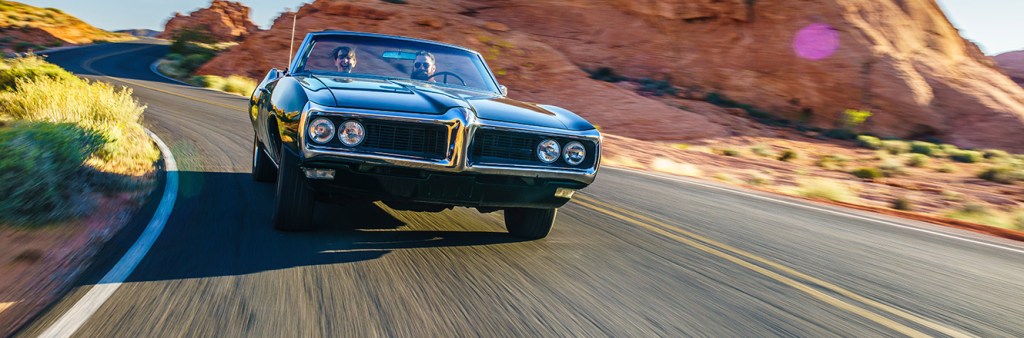
Tires rolling in the desert, the shot fades out to reveal [car make and model to be decided] a young man driving, staring quietly out the window, no radio. He stops to get gas at a dusty desert station. He checks his phone.
We see a text message from A: “I told mom you were coming. She’s so happy. Love you, see you in a few days.”
The young man looks away and shakes his head with his lips curled in a kind of sneer as he goes back to mindlessly watching the numbers twirl on the gas pump.
He goes inside to buy snacks and pays with a credit card. Dusty old cowboy type asks to check his ID, revealing a California ID, San Diego.
“Heading east are ya?”
“Yeah, the whole way.”
“Wow. Furthest I’ve been is to see the folks in Phoenix. Alright then sir, you drive safe.”
“Thanks.”
He’s driving through central California, Steinbeck territory. We can tell by the road signs.
He checks his bank account, dangerously low on funds. He presses a few buttons on his phone to activate a rideshare app. After driving a few miles he gets a ping from the next town. He turns on the radio. If a rider didn’t feel like talking the music made it feel less awkward.
He pulls off the exit and picks up an old woman outside of a small couple-acre ranch. A few horses are grazing in the front yard. Her skin is browned from years in the sun, her hands rough from ranch life, wiry and strong, and her hair is a silver-white. An old cowgirl. She wears jeans and a checkered light pink and white shirt.
“Will?”
“Yep. Maryann to El Centro?”
“That’s me.”
She seems sweet, tough but goodhearted. She sits in the back, most people don’t think it’s ok to ride shotgun but Will liked it, makes you feel less like you were driving Miss Daisy.
Will adjusts his mirrors and tries to make small talk, “Well, you broke a record, this is gonna be the longest drive I’ve given in a while.”
“Ain’t much sense in driving around here. Couple blocks and you’ve seen all there is, besides I never leave town much anyway.”
“Gotcha.”
Will took a sip out of his diet coke and pulled back onto the 8.
They pass a road sign: X miles to El Centro, Y miles to Yuma.
Maryann watches the sign pass by and speaks up. Will looks into the rearview mirror to watch her: “310 to Yuma. I love that movie.”
“Me too.”
“Which one?”
“Both.”
“Smart boy, good answer,” Maryann’s lips curl into a smile.
Will quickly fires back, “Man who Shot Liberty Valance is still my favorite though.”
“Can’t fault you for that one, boy. My husband likes Unforgiven”.
There wasn’t anything on the radio but George Strait in this part of the country, but Will didn’t mind him and it seemed right up her alley. She hummed along with most of the words.
“I was a young troubadour when I rode in on a song, and I’ll be an old troubadour when I’m gooone.” she half hums half sings under her breath as the song winds down.
“My Charlie likes that one,” Maryann says softly.
“You’re husband?”
“That’s right.”
“Does he raise those horses with you?”
She sighs… not overly sad but she lets out a quiet “he did” as she softly gazes out the window.
“I’m goin to El Centro for his funeral. Old bastard finally bit it visiting his sister out there a few days ago.”
Will, startled, “Oh… I’m… I’m sorry.”
“Ah, sumbitch, had it coming” she cracks a wry smile. “I thought it’d be funny to play troubadour at the funeral, but he always wanted ‘the cowboy rides away’, it’s just kinda a thing around these parts, so I guess I’ll save troubadour for just him and me.”
In an uncharacteristic moment, Maryann’s eyes redden and she is quick to swipe the single tear away from her cheek and her voice briefly falters “Damned ol’ cowboy always was a pain in my ass right until the very end”. The rawhide cowgirl shows a crack.Will has no idea what to do. He shuts down and stares ahead at the road, hoping she isn’t expecting him to say the next thing. “70 more miles to El Centro… fuck.”
Maryann checks her phone “Says here you’re from San Diego? You’re pretty far out to just be giving rides, ain’tcha?”
“Yeah, I’m actually heading to the east coast, just trying to make a few bucks along the way.”
“Mhhh, you’re family from there?”
“Yeah… I’m.” Will pretends to check his mirrors to buy time. “I’m going to my father’s funeral”.
“Sorry sweetie, you still got your mother?”
“Uh, yeah.”
“Well that’s good you’ll get to be there for her.”
Will nervously taps on the steering wheel, “Yeah, she’ll… she’ll like that.”
Maryann chuckles. “Damn shame ain’t it? Seems like the more fun you have, the less time you get. I wouldn’t change a thing, but that’s almost the pity of it. We did it as well as we could and I still want more.”
Will swallows, unsure of what to say, but Maryann doesn’t seem to be expecting anything in response as she watches the scenery pass by. We can just hear the gentle rumble of the road beneath the car.
El Centro is growing closer (soft, folksy song to be decided plays over the shot), and we watch the desert fly by in the car.
Maryann has reached her stop, and Will pulls the car alongside a suburban home. There are cars packed into the driveway.
“Thanks, sweetie,” Maryann says softly as she unbuckles her seatbelt and opens the door.
“Any time.”
Maryann stops next to the driver’s side window, and Will lowers it. She holds her phone up to show him a picture. There’s a tanned young couple in cowboy hats. Maryann is wearing the same shirt that she is now, but it’s bright and new in the picture. The two are giving warm smiles into the lens with their arms wrapped around one another. A younger Maryann has her hand on a tall man’s chest, and her head is resting lightly against his shoulder.
“That’s my Charlie.”
Will softly smiles through sad eyes, “that’s a good picture.”
“Oh, I know.” Maryann returns a melancholy grin.
“But hey!” She says sternly as she slaps her hand on the roof of the car. “You take care of your momma boy.”
“Yes ma’am.” Will laughs, leaning into the country-western motif.
“Alright then.” Maryann smacks the hood again as she turns and walks to the house. Will watches someone greet her at the door and welcome her in. He bites his lower lip and lets out a long, slow exhale as he turns the car into drive.
Will is frustrated, muttering to himself, “So much for easy fucking money. What am I? Her goddamn therapist?”
He pulls back onto I-8 and proceeds east.
We get a shot of him driving through the Imperial Dunes park on California’s eastern border and he is greeted by a sign welcoming him to Arizona.Will stops at a motel for the night. He brushes his teeth and eyes a copy of “The Things They Carried” he’s in the middle of reading it. He sneers at the cover. His Grandfather had been in Vietnam.
“Don’t we all Popop?” He sarcastically jokes to himself as he spits his toothpaste out and readies for bed. He wakes up the next day and gets on the road.
His phone pings with a request from another passenger, apparently Ralph needs a lift. He was heading northwest, a bit out of the way, but Will is in no hurry. We see an external shot of Will pulling up to a house just over the border, and a disheveled-looking man walks out in a Hawaiian shirt and sunglasses, toting a backpack.
“What’s up, man?!” The man cheers as he opens the door and throws his backpack against the far door.
“How’s it going?” Will asks with tension in his voice, already knowing that this guy is going to be a problem.
“Fucking golden baby!” Ralph shouts obnoxiously as Will reverses out of the driveway.
Ralph (“call me Ralphie”) is heading to a bus station near the Nevada border.
“Vegas baby!” Ralphie cheers randomly.
“Why didn’t you catch a plane?” Will asks annoyed looking into the rearview mirror. Ralphie is oblivious and doesn’t catch Will’s tone.
“I ain’t rich yet man!” He reaches into his bag and pulls out a handle of vodka. Will’s eyes widen as he cracks the bottle.
“Hey what the fuck man!?” Will shouts as he briefly swings his head around.
“Oh, calm the fuck down, bro!” Ralphie chuckles as he takes a swig.
Will turns around and shakes his head as he stares over the steering wheel.
Will listens to Ralphie drone on about how much he loves Vegas, talking about everything from the clubs to the “dime ass bitches”. He once made 500 playing craps… and subsequently lost it at the blackjack table.
Mercifully, they arrive at the bus station. Ralphie stuffs his vodka back into his pack and stumbles out of the car.
“See yas pal!” Ralphie sloppily waves a hand over his shoulder as he staggers towards the bus station doors, and that dark half of the American Dream wanders out of Will’s life.
Will clenches his jaw and mutters under his breath, “fuck this shit”. He punches his address into his phone to gauge how long it would take him to get back to San Diego. He sits in the parking lot, smacking the steering wheel a time or two.“Fucker’s already dead. What’s it matter?” Will growls to himself. A text message flashes on his phone.
It’s A again, “Aunt Lil’s making meatballs. Mom wants to know how you’re doing.”
“Oh fuuuck me.” Will groans with frustration and sets a course for the east coast.
Next acts:
Texas cowboy, father figure, emotional turnaround.
Girl in New Orleans (Pink Hair)? Heart opening back up?
Joey in Philly. The big homecoming on game day. Go Birds.Funeral.
-
On the Difficulties of Leaving a Bed With a Beautiful Woman in It
The alarm clock woke me, but I pretended that it was her kisses.
“Stay,” she pleaded through a smile. A whisper in my ear so intoxicating that it felt like some unknowable incantation.
Her lips were slow and gentle on the back of my neck as her fingers ran through my hair. A most tempting bribe.
I groaned through a closed mouth while one hand squeezed my shoulder, and she worked her fingers down my back with the other, muscles tightening only to soften at her touch. Ropes of hard-packed tissue made docile by her hands.
“Don’t go,” she sleepily laughed, wrapping her legs around my hips, her torso warmly pressing into my back. The sheets were safe, soft, and warm, everything that the outside world was not. The room was dark and cool, but our bodies radiated a defiant heat against it. The sun had only just begun to cast a bluish-gray across the sky.
I groaned again as the negotiations escalated. I kissed one of the hands that were now around my shoulders, my lips working down the fingers of my most enticing jailer. I could feel her mouth curl into a smile against my shoulder blades.
She began singing into my ear between those slow, soft kisses, and she nearly won the argument, but I would not be the same man she begged to stay if I did so.
I regretfully began to peel her legs off of me. “Nononono…” she giggled as her nails covetously scrapped around my shoulders. I turned and grabbed one of those hands, painfully sliding away until we were connected just by two hooked fingers. I leaned in to kiss her knuckle as we softly stared at one another.
I turned to leave but was stopped at the door one last time, “hurry back.” I approached the foot of the bed and could see the glow of hope in her eyes. Had her campaign been successful? No such luck. I knelt and kissed the top of her purple-clad foot firmly. A promise with no words.
I finally opened the door to no further resistance. The madness of the outside world roared in my face, but I was armored against it now. I plunged into the breach without hesitation, for I had orders to hurry back.
-
A Summer in the Clouds
The night air was hot stepping off the plane at the Kathmandu International Airport. My luggage was lost, (which I was not surprised to learn was a common occurrence). I was told to lie and say that I was there on vacation instead of charity work. Both were equally true, but I had been tipped off that a luxury pass would be cheaper and involve less scrutiny from customs officials.
I was directed out to a line of taxis, and I watched a monkey drink a Sprite out of the trash like a seasoned vet. The rally car took me to a hostel in the heart of the city. It was obvious that my skim-milk ass was heading for the tourist district. The people were lovely, and my bag was promptly returned to me the next day. I had a few days to wander the city before I claimed my ticket for the mountains.
Don’t eat Nepalese pizza: it just makes you yearn for the real thing. Kathmandu is one of the longest-inhabited cities in human history, and it shows in the best way. English was widely spoken, and I was aware of basic customs, so I’d like to think I didn’t make a complete ass of myself. I did some Christmas shopping. Haggling is fairly commonplace, and I’m sure I underpaid for some knockoff Oakley sunglasses and overpaid for prayer flags by local standards. You’d pay four times the cost at some Southern California yoga studio. “The worst thing about San Diego is that LA found out about it.”
The next day I arrived at the Kathmandu “bus park” with directions to head to the village of Thulo Pakhar. One man looked at me curiously when I mentioned the name. The only reason some white boy is heading up to the mountains is to take a crack at Everest, and the Sindhupalchowk District is a good shot away from base camp, but I suppose another man knew of the charity. He must have explained it to him in either Hindi or Nepali. The curious man gave a knowing nod. The earthquakes had destroyed a fair amount of schools, and I figured helping build one was as good enough of an excuse for a vacation as anything else.
The bus ride from Kathmandu was packed full. It took hours of rocking back and forth to travel less than one hundred miles, but it was amazing. I didn’t even care to hear that a bus would go over the side of some ledge once a week. You’ve gotta pay to play.
The driver and everyone else on the bus knew exactly what my stop was. There was no other reason for a guy like me to be hitching a ride. They thanked me as I departed. I will always love the Nepalese people for their demure but proud demeanor, but the people of the mountains are of a different breed.
I stepped off the bus to a ramshackle convenience store. The building was made of corrugated metal, but then I was immediately informed of the wi-fi password as I bought a coke and a candy bar. I was told that the work camp was just up the hill. The technological whiplash of internet without indoor plumbing.
The sun was setting as I walked down into the camp. Everyone else must have just gotten back from work. I checked in and found my tent site. I set up the bivouac (bivvy) bag I had used during my hike on the Appalachian trail and walked back to headquarters. It was like stepping into the rowdiest UN meeting ever conceived. There was a dance party breaking out, which I would come to understand was a daily occurrence.
I learned a few names and sat back, knowing I had established zero credibility.
I was approached by an Australian woman (my own personal kryptonite) who cracked a beer for me on the corner of a table and introduced herself. We spoke. She had been in-country for some time.She asked to dance. I soon learned how the camp and work schedule functioned. I made enough friends to walk down to the Nepalese 7-11 for supplies. I met a pair of English boys who were there backpacking together. They were fresh off the bus as well. Proper well good lads, still miss those guys.
The next day we paired off in different trucks to the two job sites at play. Nepal needed schools because many fathers were off working in another country while the mothers tended to the family farm. This left the children without general care or education. I was told in passing that one does not need a passport to cross from Nepal to India, making human trafficking a very simple and lucrative endeavor.
We were so high up in the mountains that shipping heavy equipment was nearly impossible, so the vast majority of work was done by hand. There was a cement mixer, but it had broken long before my arrival. I was not in-country nearly as long as some of the others. There was a Welsh builder who had gained the love of all of the Nepalese (a well good proper lad).
The Australians and English worked well, as did the Americans and the occasional Canadian. The Irish worked well and were always good for a bit of banter. The French were… interesting. The charity was also training local Nepalese to be masons. They are a modest but strong people, equipped with the kind of stoic toughness that comes from a life that knows no other way. The national saying of Nepal amounts to “what can you do?” They are a people experienced in picking up and moving on after calamity.
I would run after work, and it became a local fascination. I was a curiosity. I would rip down the hill from our campsite like a wild mustang on open plane. The air was thin, but I was acclimated by then. The area is called “the roof of the world”, and I understand why. I would pass by houses and people would yell and yip at me. I would scream and howl back. Sometimes the kids would run out and chase me. Some would laugh and lose interest quickly. But then you could see the fire in certain eyes. Sherpa blood. Sherpa blood will never die.
The job was hard. The concrete was mixed with hand tools. The work on the school was difficult but predictable, a glowing testament to our managers and workers, but it took its toll. Some were bused out to hospital. The pieces of half-mixed concrete found their way into my gloves and boots, like shards of glass. The lacerations mounted up. I spent a day off entirely in a hammock. My boy from Miami said, “you needed that shit”. A lovely woman from Sweden offered her bed in the bunkhouse while she took a tent from someone who had just left the camp.
I healed up and went back to work. One of the schools was nearing completion. The Nepalese men and women who were training as masons would come into camp once a week to have dinner with us. Another disco started up, but I generally liked playing cards with the boys between songs. The Nepalese and I spoke of sports and my running. Cricket is the only sport I still don’t fully understand (but up Liverpool, “you’ll never walk alone”).
A French woman came up to ask me for a light. It was always a good idea to keep a lighter on you. You never know when it might come in handy.
“And then you come dance?”
“Yeah, maybe later.”I returned to the card game.
There was an infamous hike down into one of the worksites. The Chamuna Trail. Supposedly some semi-professional triathlete had set the record for racing back up it. If I ever meet the man, I’ll buy him a beer and tell him to go fuck himself. I gave it a shot one day along with a French ski instructor. I missed the mark by a second and change. I collapsed on the ground, heaving and presenting my stopwatch. I promptly vomited next to the truck that was to take us back to camp. The locals asked if I was sick.
“He ran the hill.” Someone replied.
They immediately understood. I was in a daze as we drove back. The burning lava fields of Hawaii were more painful, but the Chamuna Trail was a close second.
One of the men jammed a finger into my sternum and growled into my ear “Sherpa blood.” We clanked beers at camp later that night, and I hugged him for the compliment. The Nepali name for Mount Everest is Sagarmatha. Goddess of the Sky. The Mother of All. I felt anointed by the roof of the world.
I worked the Chamuna site a few days later. They brought us flowers. We were on break, and I was collapsed on the floor in the shade. The summer in Nepal is like a tropical Colorado, in both climate and scenery. The little girls recognized me by my aviator sunglasses and Philadelphia Eagles hat I would run in. People were passing out flowers, but the children formed a line in front of me.
Most were eager, but some were terrified, all but throwing their handfuls of wildflowers into my lap. I was that wild beast their fathers had some reason to run out of the house to yip and cheer at as I passed by, urging the pitbull through the final unforgiving minute of the last round. I ran far harder than I should have many of those days.
“Dhanyabad! Dhanyabad! Dhanyabad!”
“Thank you! Thank you! Thank you!”
I put the flowers in my hard hat as a set of Australian boots arrived next to mine.
“I’m not crying. You’re crying. Shut up.”
“They love you.”
“I think I’m more of a zoo exhibit.”
“No. They love you.”
Right back atchas Nepal.I tried to keep those flowers for as long as I could, but it was futile. This is not a place for delicate things.
It was time to leave the mountains. Everyone who leaves gets to say a few words. I broke out the line about being invited to the rowdiest UN meeting. I don’t mind saying I stuck the landing. I climbed the hill and waited at the bus stop with my pair of proper well-good lads. We boarded the bus. I’m still upset that I lost the video of our bus rocking side to side on the journey back to Kathmandu.My first time in the city I knew how to not be an asshole. Now I knew how to blend in. I was flattered when I stopped getting the white boy’s price for things, and I then knew not to eat the pizza. Lovely people. Terrible food. If you’re ever in Nepal, go to the Everest Bar. I promise you’ll have a good time.
The boys and I bought Dhaka topis. It’s a very simple hat, but we were educated on the subtle ways to wear it properly. University students on gap year will slap it on their head, but wearing it right will infer a level of respect for Nepali culture. You will legitimately score street cred just for learning which side the seam goes on and how far up to wear it on your brow.
I took a rickshaw to the airport. There was a funeral pyre burning by the river. My flight to the UAE was delayed a bit, but it gave me time for a nap. As I approached the security checkpoint the guard politely asked if he could remove my topi. It’s an important cultural symbol. I agreed as he cautiously removed it and patted down the rest of my body. Luckily he had no use for the M4 slung across his back. The flight to Dubai was filled with myself and Nepalese gentlemen traveling for work. It was sparsely populated, and many of us were able to sleep stretched across an entire row of seats. Sure beats a bivvy bag.
It was the start of Ramadan in the Middle East, meaning that observant Muslims would fast during the day. Good luck getting a cheeseburger past sunset. Between the jetlag and malnutrition, it passed in a blur. I wish I could have seen Dubai from more than just the air.
Touchdown in New York City. JFK airport was a situation. I was once again a stranger in a strange land, but I treated myself to a steak. People asked me where I’d been. My boots still had Nepali dirt on them, and I was wearing my trusty keffiyeh. I had bought it for the AT, and it proved itself again in Central Asia. I was hot with it draped around my neck, but the truth is that I just didn’t have any more room in my pack.
I got back to San Diego in the middle of the night, but the time of day was of no consequence at this point, and I lived within walking distance of the airport (love youse OB). I woke. I didn’t have any sailing lessons to teach for the next couple of days. My friend asked me “what are you going to do today?”
“I’m going surfing”.
I love you Nepal, and I hope it’s not the last time I ever see you, but I really wish you had more beaches. -
Pilot Episode: “StrapJob”
Pilot Episode: “Strapjob”
Setting: Church, light choir and/or organ music as we slowly pan into the first pew. As we pan into the first pew we can see the back of a man in a suit, his shoulders start to shake and as the pan gets closer we can hear him shuddering to stifle cries. A proud father about to see his little girl get married. As the pan zooms in to him with his own bride on his left, he is met with an elbow to the ribs. His wife turns.
Maryann: For god’s sake Sonny, she’s getting married, not dying.
Narrator [Me?]: Truly a love story for the ages
Intro montage / song: Billy Joel’s Keeping the Faith
Setting: 1950’s Philadelphia. A young man in his late teens walks down the street, looking like someone that stepped out of a Grease cast reunion. He casually greets his friends on the street as he walks by various row-homes. [single camera shot]
Character: Yo Sonny!
Sonny: How’s it going Numpy!?
Etc…
Sonny arrives to meet his buddy on a particular corner, he bums a cigarette off of him.
Sonny: How’s it going Jackie?
Jackie: Hiyas Joe, not a lot goin’ on right now. Yo. Can you believe Numpy tried asking out that Okomski girl? She shot him down and laughed about it. Right in the guy’s face! Hey’yo that Polack girl is a nutjob.
Sonny: Yeah, she’s a piece of work. I don’t know what kind of Strapjob is gonna put up with her.
Jackie: Beats me pal. Did youse here my cousin got the bronze star in Korea?
Sonny: Oh yeas. I heard that. When’s he getting back?
Jackie begins to explain but the sound is drowned out by an angelic chorus as a young Joseph Okomski sees a young, blonde girl in her teens pass by on the opposite sidewalk. Maryann Trojecki flips her hair behind her and the two lock eyes for a moment across the street before she looks back to the sidewalk in front of her. Sonny stares like an idiot, jaw agape. Seconds feel like hours.
Jackie: Right?
Sonny snaps back to reality,
Sonny: Uhuh, yeah. Seeyas Jackie
Sonny starts walking back home
Cut to approximately 15 minutes ago in Maryann Trojecki’s house.
Maryann: Hey Mommy, I’m going to work.
Mom: Aright babe, be safe.
Maryann walks from her row-home to the bakery she works at. On the way she flicks her hair and happens to lock gaze with that Okomski guy. She keeps right on walking to the corner bakery where she works the counter. After meeting with a few customers…
queue montage of guys coming in to flop-sweat hit on her,
“Hey you know, I just think…”
“Next!”
Maryann rolls her eye as the next customer approaches the counter until….
Joseph Okomski’s little sister, Lillian “Lil” walks in. They chit-chat while she completes her order, but the register has incorrect change. Maryann has to under charge her by one cent.
Lil: Oh no I’m sorry about that hun.
Maryann: No problem, just bring an extra penny back next time youse are in.
The camera follows Lil walking back home, casually greeting people as she walks back. She opens the row home door and casually walks in, just a routine grocery trip. As she sets the order down in the house she shouts out.
Lil: Heyyo! We owe the bakery a penny next time we go inner!
Sonny snaps his head into the kitchen.
Sonny: Is that Okomski girl workin’ the counter?
Lil: When I was there, yea.
Rock music (Johnny B Good) plays to match Sonny’s frantic energy as he rummages through every drawer he can get his hands on to find a penny for Mary. After ripping half the house apart, he gets his hand on a beautiful one-cent piece.
Sonny: 1929, good year.
Cut to Sonny rushing down the street as if he were delivering the cure to cancer. Neighborhood boys yell “yos” at him and he waves back half-heartedly on his way down the sidewalk. Cars scream to a halt and honk at him as he sprints through a crosswalk. He arrives at the bakery, panting, out of breath.
Sonny: I’m Lil’s big brother. I heard we owed you a penny.
Maryann [staring at him like he’s an escaped psychopath, her eyes darting back and forth, but her voice softens]:… yeah.
Sonny puts the penny on the counter: so that’s for you. 1929 good year.
Maryann: Yeah… if you don’t count the stock market crash….
Sonny, still trying to catch his breath, whips his sweaty hair over his brow: Yeah, but before that it was a pretty good time, right?
Maryann: Sure.
Sonny: I just heard you liked history… anyways, djyouse hear Jackie Cataldi’s cousin got the bronze star in Korea?
Maryann is getting bored with all the guys coming into the bakery to ask her out.
Maryann: Yeah, I, I heard.
Sonny, starting to regain his breath: Ok, well, there’s your penny. I’m gonna, I’m gonna get goin.
Maryann [quizically]: Ok… all that over a penny?
Sonny [resigned] throws his head over his shoulder and softly shrugs: Yeah, I guess so.
Sonny shamefully walks out, the doorbell dings as he walks back into the street.
Another girl who was waiting for her order serves as witness: “I didn’t know that Okomski boy could get nervous.”
Maryann: Is he that guy from the other end of Almond Street?
Other girl: Yeah, he’s the one whose always getting kicked out of school… kinda cute though.
Maryann [pensively]: Yeah, he’s cute when he sweats.
Cut to Sonny walking back home, disheveled: Stupid, stupid, stupid.
He walks through the front door, announces that the penny situation has been resolved.
Cut to a few hours later, he answers a knock on the door. It’s Mary.
Sonny: Yo
Mary: Yo
They both stand awkwardly without actually looking at each other and shuffling their feet.
Sonny: If issabout the penny I uh I can get more…
Mary cuts him off: Oh no, no. I just wanted to letchas know that I’m working the counter on Tuesday, so if you guys need anything, I can make sure its fresh. [she keeps looking in different directions as she speaks]
Sonny: Oh yeah, I’ll see what we need, but uh…. Yeah. I’ll uh I’ll come by.
Mary: Ok.
Sonny: Ok.
Sonny collapses after he closes the door. He pants as we cut to credits and Billy Joel starts playing.
-
Subscribe
Subscribed
Already have a WordPress.com account? Log in now.
 Two Birds